Our battery can supply or absorb approximately 1 MW of power continuously for four hours. If we require 2 MW but the grid can only provide 1 MW, our battery supplies the remaining 1 MW. Consequently, when Stedin detects that the grid is becoming overloaded, our Energy Management System can ensure that we temporarily reduce our electricity consumption and feed some of our available energy back into the grid to help stabilize it. This Energy Management System can identify major energy-consuming equipment—such as charging stations and heat pumps—and temporarily scale back their usage. This provides flexibility without requiring an immediate halt to production.
Then there is the thermal battery, which uses 8,000 liters of oil—a particularly interesting feature. Normally, one might use electrical energy to generate heat during peak demand periods. With this thermal battery—which is charged using heat recovered from our production equipment—we can store heat and release it whenever our facilities require it. This eliminates the need to draw additional electricity for heating at those times.
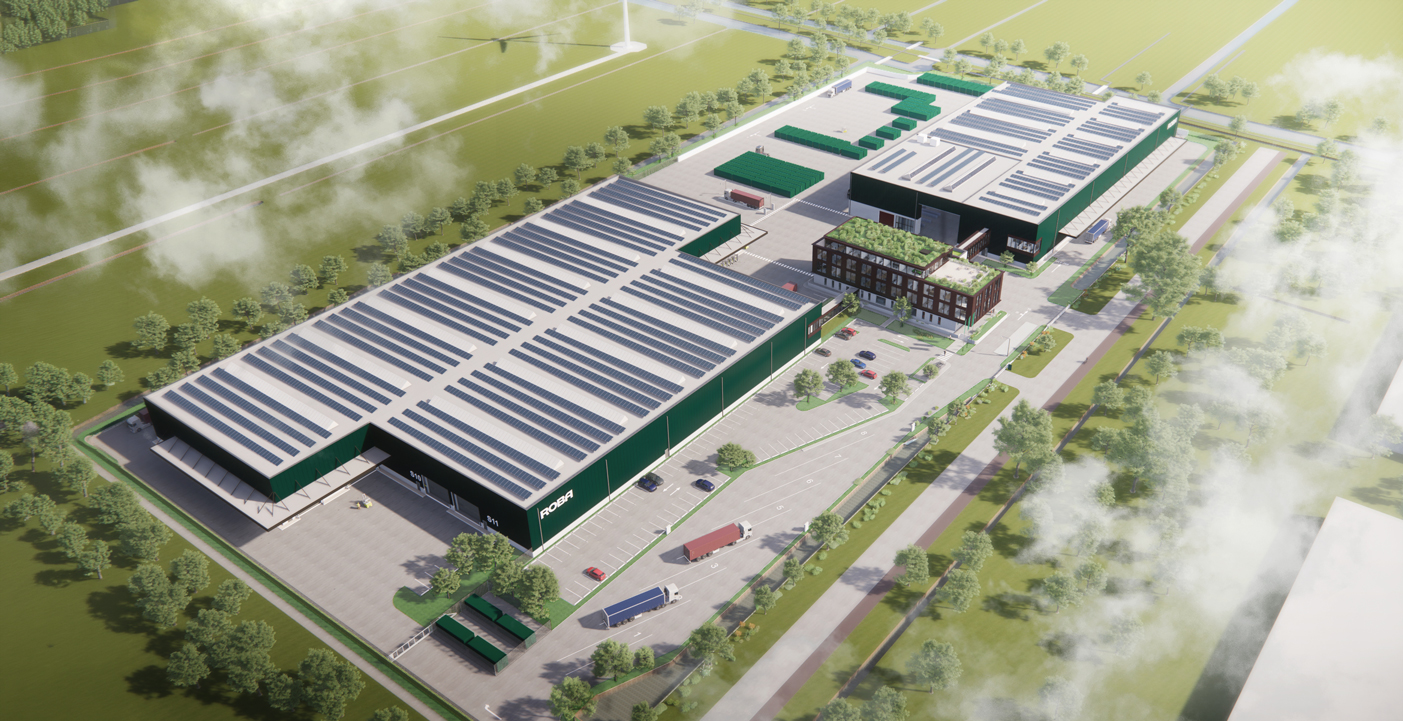
The solar panels, combined with an Energy Management System, allow us to direct surplus power to a battery, shift production processes to hours with high solar yield, and limit the amount of energy fed back into the grid when requested. A generator is available to provide additional flexibility if needed. Should Stedin issue a load-shedding request—or in the event of a power shortage—a portion of our production operations can run entirely on self-generated energy. Our building management system ensures that all facility-related installations respond automatically; for example, by dimming lights, managing electric vehicle charging stations, or adjusting temperature and ventilation settings.
Collectively, these components create a flexible energy system. This enables us—at Stedin’s request—to temporarily reduce our power consumption from the grid or, conversely, to feed energy back into it. In effect, we function as a small, controllable power plant that helps to buffer peaks on the grid.