24 November 2026 Kendrick de Zwart Reading time: 6 minutes

Copper, brass and bronze: what is the difference?

Quick answer

Copper is a metal and forms the basis of many copper alloys. Brass consists mainly of copper and zinc. Traditional bronze consists mainly of copper and tin, although other types of bronze also exist.

Copper is primarily chosen for its high electrical and thermal conductivity. Brass combines ease of processing with a yellow-gold appearance. Depending on the alloy, bronze is used for properties such as strength, wear resistance, sliding properties or corrosion resistance.

Due to their reddish, yellow and brown tones, copper, brass and bronze can look similar. However, they behave very differently during production and in their final applications. After all, an electrical conductor requires different properties from a deep-drawn visible component or a wear-resistant bearing. The best material choice therefore starts not with colour, but with the function of the component, the processing method and the operating environment.

What are copper, brass and bronze?

The main difference lies in their composition. Copper is the base metal. Alloying copper with zinc produces brass. Traditional bronze is produced by alloying copper with tin. This composition influences:

  • colour;
  • electrical and thermal conductivity;
  • strength and hardness;
  • formability;
  • machinability;
  • wear resistance;
  • corrosion resistance.

Moreover, brass and bronze are not single materials with a uniform composition, but families of copper alloys. Their properties can vary considerably within each family. “Brass” or “bronze” alone is therefore not a complete technical material specification.

Copper: for conductivity and formability

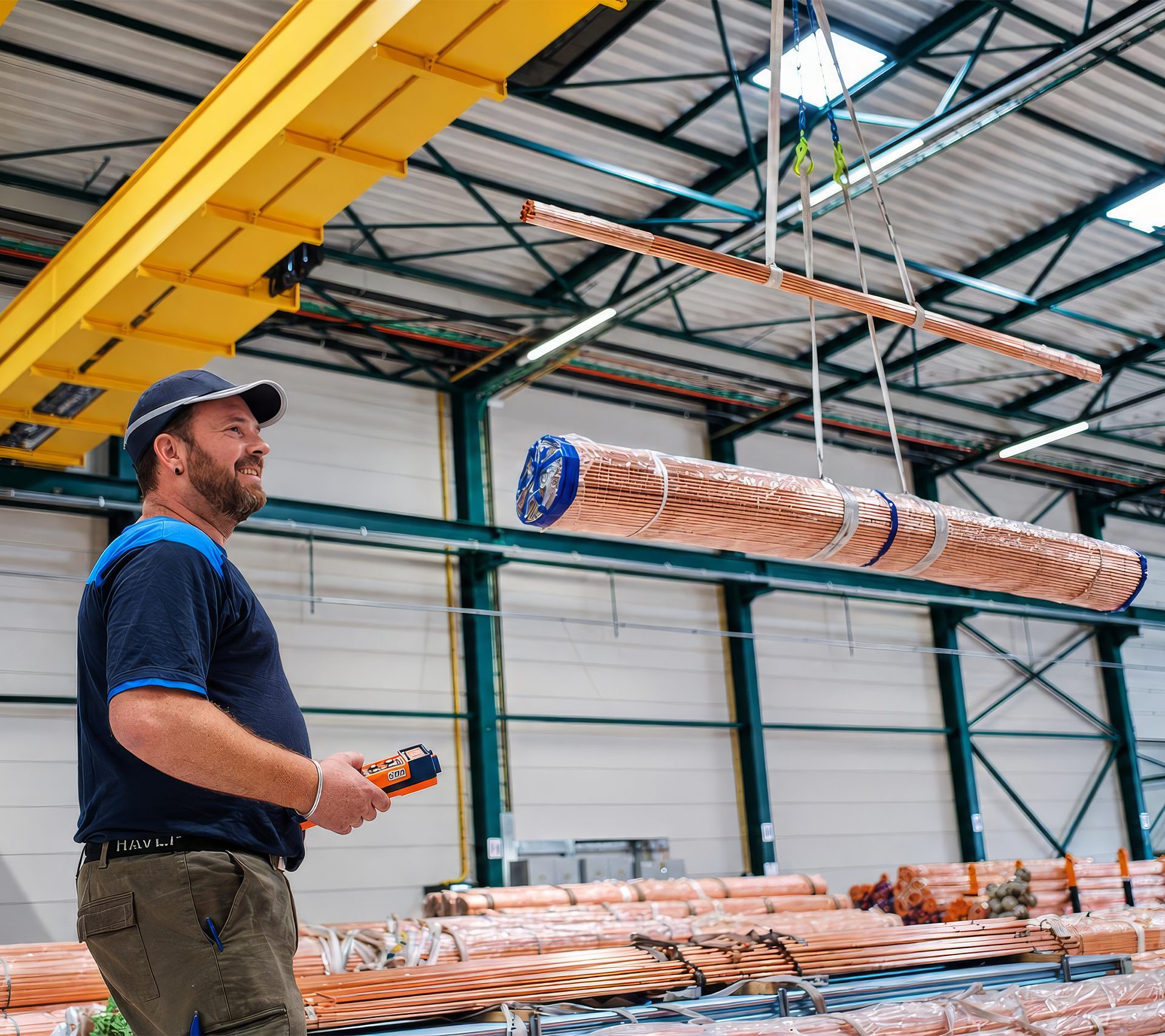
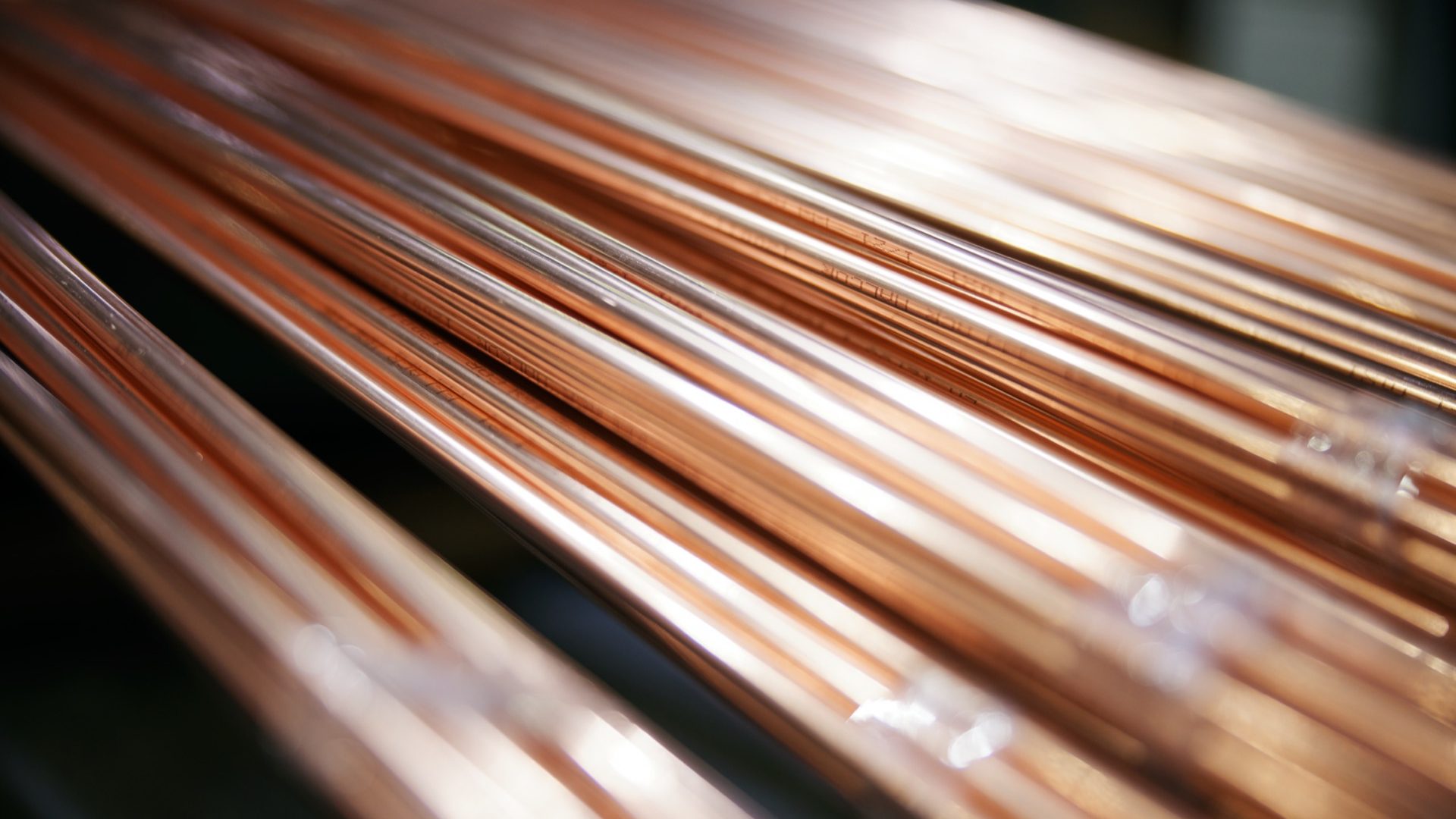
Copper has a characteristic reddish colour and very high electrical and thermal conductivity. It also offers good formability. It can be rolled, bent, drawn and formed, among other processes. Copper is therefore widely used for:

  • electrical wiring;
  • connectors and contact components;
  • pipes;
  • heat exchangers;
  • roofs and façades;
  • heat dissipation applications.

When used outdoors, copper may gradually change colour. The surface usually becomes darker brown first and may eventually develop a green patina after prolonged exposure. View our copper range.

Brass: for ease of processing and appearance

Brass consists mainly of copper and zinc. It usually has a yellow-gold colour and, depending on the grade, can be readily formed, stamped, deep-drawn or machined.

The composition determines which applications a particular brass grade is suitable for. CuZn30, for example, is known for its good cold-forming properties. Other grades are selected for general sheet metalworking or precise turning and milling.

Roba Metals supplies CuZn30 and CuZn37 from stock, among other grades, in various material conditions. Brass is used for applications including:

  • roof and façade details;
  • fittings and taps;
  • couplings and valves;
  • electrical components;
  • door and furniture fittings;
  • interior and design products;
  • musical instruments.

Bronze: for specific technical properties

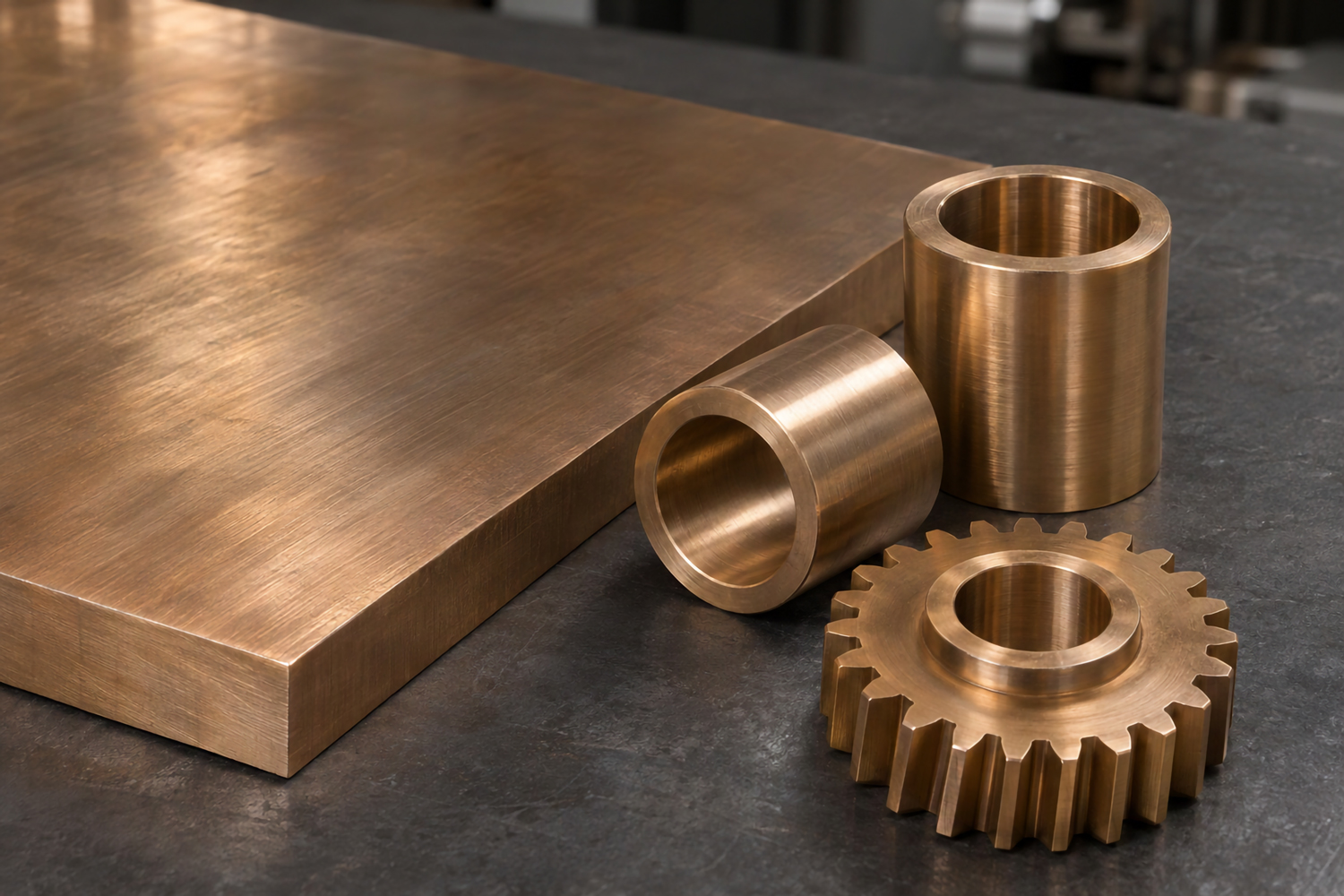
Bronze is a collective term for various copper alloys. Traditional tin bronze consists mainly of copper and tin. Other types include aluminium bronze, phosphor bronze and silicon bronze. Depending on the alloy, bronze may be selected for:

  • strength;
  • wear resistance;
  • sliding properties;
  • fatigue resistance;
  • corrosion resistance;
  • castability.

Bronze is therefore often used in bearings, bearing bushes, gears, springs, fittings, works of art and specific marine components.

Not every bronze grade has the same properties. Nor is every type of bronze automatically suitable for use in seawater. For technical or marine applications, the exact alloy must be matched to the load, design and operating environment.

Comparing copper, brass and bronze

Typical composition
Copper

Mainly copper

Brass

Mainly copper and zinc

Bronze

Traditional bronze: mainly copper and tin

Typical colour
Copper

Reddish

Brass

Yellow-gold

Bronze

Reddish-brown, golden-brown or dark brown

Key strength
Copper

High electrical and thermal conductivity

Brass

Combination of ease of processing and appearance

Bronze

Specific properties such as wear resistance or sliding behaviour

Processing
Copper

Often readily formable

Brass

Depending on the grade, readily formable or machinable

Bronze

Highly dependent on the bronze grade

Highly dependent on the bronze grade
Copper

Good in many environments

Brass

Good in many environments; dezincification may be a risk

Bronze

Certain grades are suitable for demanding conditions

Typical applications
Copper

Electrical applications, pipes, roofs and heat transfer

Brass

Sheet metalwork, fittings, hardware, interiors and electrical engineering

Bronze

Bearings, gears, springs, castings and specific marine components

Which material should you choose and when?

The choice of material is determined primarily by what the component needs to do and how it will be produced. High conductivity requires a different solution from intensive forming, precision machining or prolonged friction.

Choose copper when conductivity is the priority
Copper is the obvious choice when high electrical or thermal conductivity is important. Its good formability also makes it suitable for applications such as pipework and formed building products. Copper is therefore often selected for:

  • electrical conductors;
  • connectors and contact components;
  • heat exchangers;
  • pipes;
  • roofs and façades.

Choose brass for ease of processing and appearance
Brass is an attractive option when the material needs to be easy to process and will remain visible in the finished product. Depending on the grade, it can be deep-drawn, stamped, bent, turned or milled. Brass is therefore often selected for:

  • fittings and couplings;
  • taps and sanitary fittings;
  • architectural and furniture hardware;
  • electrical components;
  • roof and façade details;
  • interior and design products.

The exact brass grade remains a decisive factor. A deep-drawn component requires different properties from a turned coupling.

Choose a bronze grade for specific technical requirements
Bronze may be suitable when requirements relate to wear resistance, sliding behaviour, fatigue resistance, strength or corrosion resistance. Bronze is therefore used for:

  • bearings and bearing bushes;
  • gears;
  • springs;
  • fittings;
  • cast technical components;
  • works of art and bells;
  • specific marine components.

The choice must be based on the exact bronze alloy. “Bronze” alone does not provide enough information.

Brass or bronze: what is the difference?

Brass and bronze are both copper alloys. The main difference is that brass consists mainly of copper and zinc, whereas traditional bronze consists mainly of copper and tin. This does not automatically mean that:

  • bronze is always harder;
  • bronze is always more corrosion-resistant;
  • brass is always easier to process.

These properties vary according to the alloy and material condition. Some brass grades are developed for intensive cold forming, while others are designed for high-speed machining. Bronze also includes a wide range of grades with different mechanical and chemical properties.

The correct comparison is therefore not simply brass versus bronze, but one specific alloy compared with another under the conditions of the intended application.

How can you identify copper, brass and bronze?

Colour provides an initial indication:

  • copper is usually reddish;
  • brass is generally yellow-gold;
  • bronze is often reddish-brown, golden-brown or darker.

However, colour does not provide conclusive proof. Oxidation, patina, coatings, surface treatments and the precise alloy may alter the appearance. As a result, copper and certain bronze grades can look very similar.

A magnet test also provides only limited information. Common grades of copper, brass and bronze are non-magnetic or only very weakly magnetic. If a magnet sticks firmly to a copper- or brass-coloured product, it may be steel with a metallic coating. However, a non-magnetic response does not prove which copper alloy the product is made from.

Reliable identification requires a material designation, product information, a material certificate or a material analysis.

Can copper, brass and bronze be used outdoors?

Copper, many brass grades and certain bronze grades can be used outdoors. The surface may gradually change colour. This is not automatically a technical problem and, in architecture or design, may even be part of the desired appearance.

Suitability for outdoor use depends on factors including:

  • the exact alloy;
  • the surface finish;
  • the design and water drainage;
  • contact with other metals;
  • exposure to moisture and salt;
  • air pollution;
  • the desired level of maintenance.

For coastal areas, seawater or other demanding conditions, the general description of copper, brass or bronze is not sufficient. The exact alloy must be selected on the basis of the operating environment and technical load.

Order copper and brass from Roba Metals

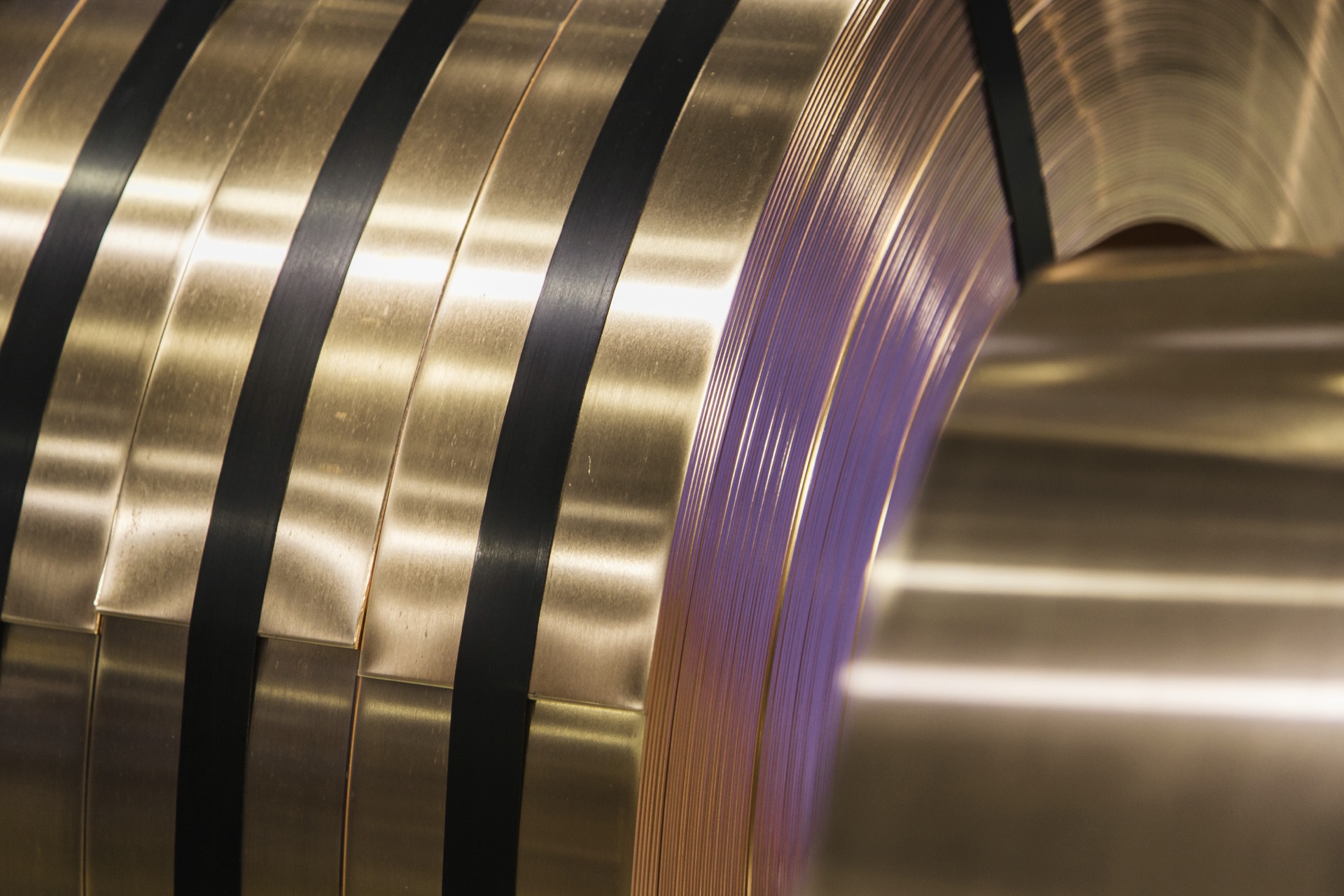
The correct material choice is not determined solely by composition. The processing method, material condition, product form, surface quality and final application also play a role. Roba Metals offers a wide range of non-ferrous metals, including copper and brass. Depending on the material, we supply various grades, conditions and product forms. Available brass products include sheets, strips, coils and couplings. CuZn30 and CuZn37 are standard available grades. In addition to standard commercial sizes, specific dimensions and forms of supply are also possible. Our non-ferrous specialists can help you match the material and product specification to your production process and final application.

View our non-ferrous range

Frequently asked questions